
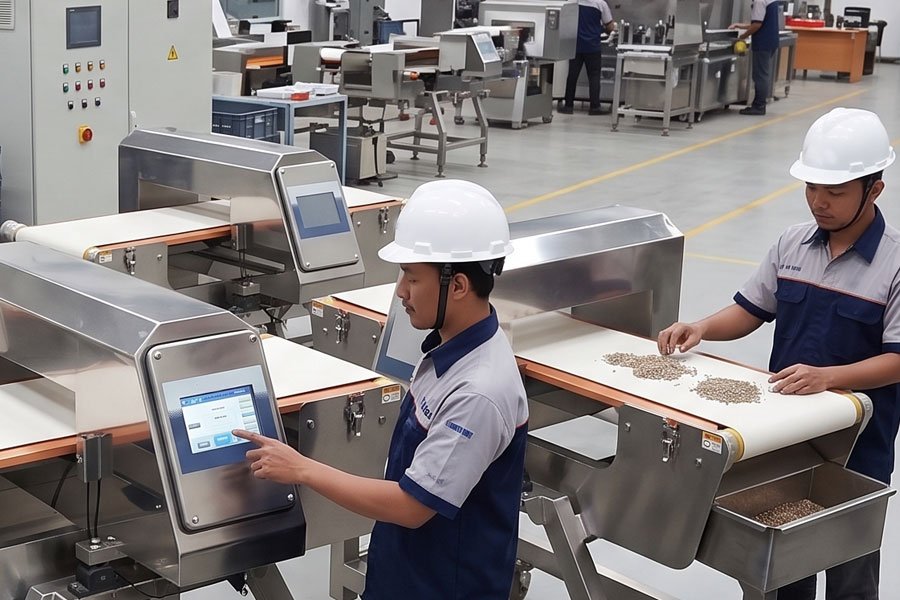
In the modern food manufacturing landscape, the integrity of the supply chain is paramount. As production volumes increase and global distribution networks expand, the risk of physical contamination—specifically from metal fragments—has become a critical concern for food safety and quality assurance teams. Whether introduced through machinery wear, maintenance debris, or raw material impurities, metal contaminants pose severe risks to consumer health, including choking hazards and internal injury. To mitigate these risks, the implementation of a high-performance metal detector for food industry applications has transitioned from a recommended best practice to a mandatory requirement for regulatory compliance and brand protection.
The fundamental principle behind industrial metal detection relies on the disturbance of an electromagnetic field. Because different metals possess varying levels of conductivity and magnetic permeability, the sensitivity of these detectors must be carefully calibrated to ensure that even the smallest particles are identified without causing excessive false rejects.
The Critical Necessity of Metal Detection
The primary driver for installing a metal detector for food industry operations is the protection of the end consumer. Physical hazards are consistently ranked among the leading causes of food recalls globally. Beyond the immediate health risks, contamination incidents can result in devastating consequences for manufacturers, including costly Class, product liability litigation, and long-term erosion of brand equity. Furthermore, regulatory bodies such as the FDA and organizations overseeing standards like HACCP, BRCGS, and SQF mandate that food processing facilities maintain rigorous foreign body detection programs.
Beyond consumer safety, these systems serve a vital role in protecting the manufacturing infrastructure itself. Metal contaminants, if left undetected, can cause catastrophic damage to downstream processing equipment such as high-speed mixers, grinders, and slicers. By capturing metal particles early in the production flow, manufacturers can significantly extend the lifespan of their machinery and reduce the frequency of unscheduled downtime.
Technical Challenges: The “Product Effect”
One of the most significant hurdles in configuring a metal detector for food industry use is the phenomenon known as the “product effect.” Many food products—particularly those with high moisture, salt, or mineral content, such as fresh meat, cheese, or fortified cereals—are inherently conductive. This conductivity creates an electromagnetic signature that can mimic the presence of a metal contaminant, leading to false alerts.
To overcome this, modern inspection systems employ sophisticated digital signal processing and correction technology. By filtering out the background signal generated by the product itself, these systems can isolate the distinct signature of a metallic contaminant. Engineers must perform careful validation during the commissioning phase to ensure that the detector is tuned to the specific moisture and density profile of the product being processed, ensuring that the system maintains its sensitivity thresholds without compromising operational efficiency.
Strategic Integration in Production Lines
The placement of a metal detector for food industry applications is determined by the specific stage of production. For bulk ingredients like powders, grains, or spices, gravity-feed or pipeline detectors are typically installed to inspect the material before it reaches the packaging stage. For finished goods, conveyor-based systems are the industry standard, often positioned at the end of the line to catch any contaminants introduced during the final filling or sealing processes.
Compliance and Operational Excellence
Maintaining compliance with standards requires more than just the installation of hardware; it requires a documented, verifiable monitoring program. This includes:
- Establishing Critical Limits: Defining the maximum acceptable particle size based on risk assessment.
- Routine Monitoring: Performing regular checks using certified test pieces (ferrous, non-ferrous, and stainless steel) to ensure the system is functioning at its validated sensitivity.
- Corrective Actions: Having a clear, pre-defined protocol for when a detection failure occurs, including the quarantine of all product processed since the last successful check.
By integrating these systems, manufacturers not only ensure that their products meet the highest safety standards but also streamline their operations. Modern systems require minimal manual intervention, allowing for high-speed, automated production that remains both safe and efficient. As the industry continues to evolve, the commitment to advanced metal detection remains a cornerstone of quality assurance, ensuring that every batch produced is free from hazardous foreign bodies and ready for the consumer market.
 English
  Indonesian