
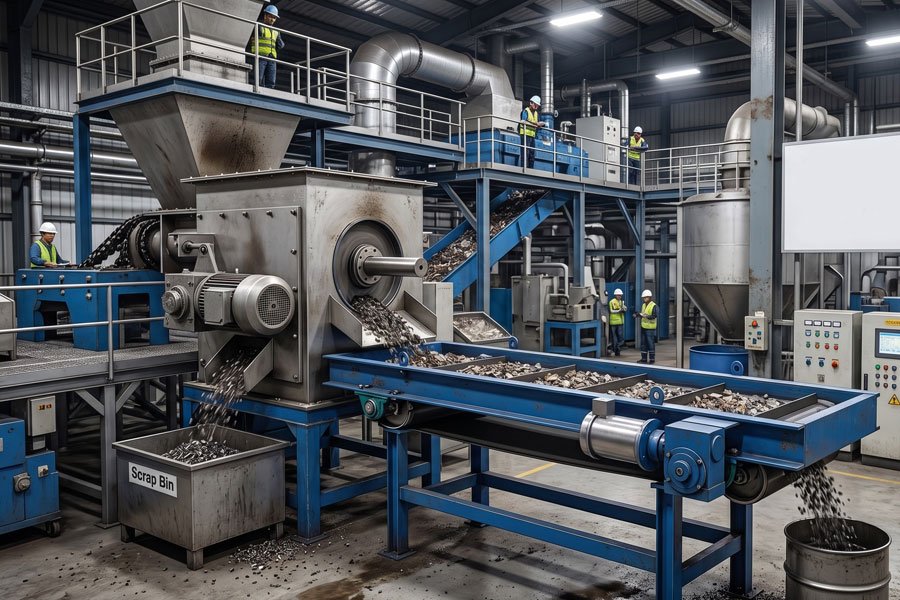
In the modern industrial landscape, the pursuit of purity, safety, and operational efficiency is paramount. Across sectors ranging from mining and mineral processing to food manufacturing and recycling, the ability to isolate specific materials from a bulk stream is a critical technical requirement. Central to this process is the magnetic separator conveyor, a sophisticated piece of equipment designed to harness magnetic fields to extract ferrous contaminants or recover valuable magnetic minerals from non-magnetic substances.
The fundamental principle governing the operation of a magnetic separator conveyor involves the interaction between magnetic susceptibility and mechanical transport. As material is moved along a conveyor belt, it passes through a high-intensity magnetic zone—often generated by electromagnetic drums, pulleys, or suspended magnets—which exerts a force on magnetic particles. This force, which must overcome the gravitational and frictional forces acting on the particle, allows for the precise separation of materials.
By adjusting the magnetic intensity—often measured in Tesla or Gauss—operators can tune the system to target specific minerals or contaminants, ensuring that the separation process is both accurate and repeatable.
Applications Across Key Industries
The versatility of the magnetic separator conveyor makes it an indispensable asset in diverse industrial environments. In the mining sector, these systems are utilized to extract iron ore from waste rock, a process that significantly enhances the concentration of valuable minerals before they proceed to smelting. By removing magnetic impurities, mining operations not only improve the quality of their final product but also protect downstream machinery from excessive wear and tear caused by abrasive ferrous debris.
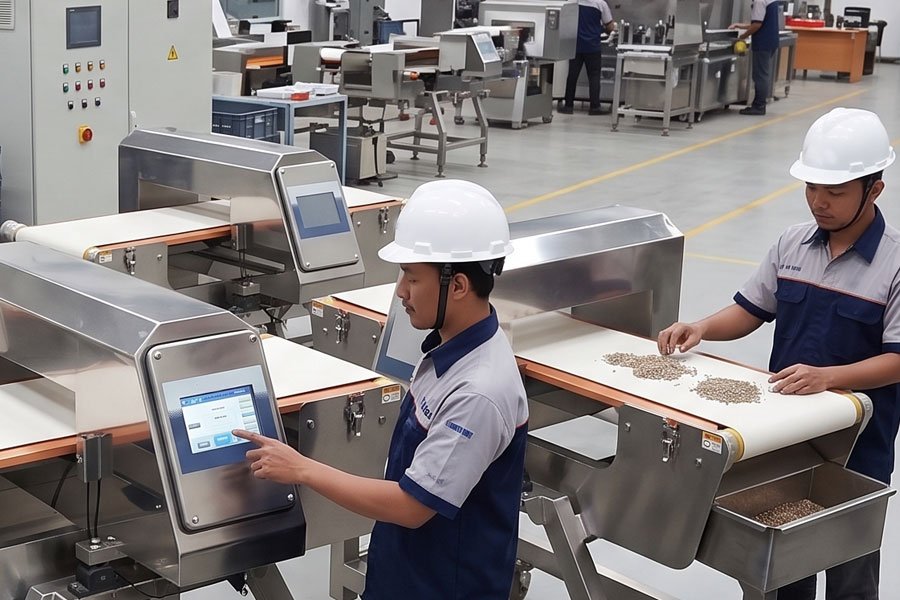
In the food and pharmaceutical industries, the stakes are significantly higher, as the primary objective is consumer safety. Magnetic separator conveyors are deployed to detect and remove minute metal fragments from grains, spices, and powders. The failure to remove such contaminants could lead to severe health hazards for consumers, potential product recalls, and costly legal liabilities. Consequently, these systems are engineered to meet stringent hygiene and safety standards, ensuring that production lines remain free from metallic contaminants that could compromise product integrity.
The recycling industry also relies heavily on this technology to improve the value of recovered materials. By separating ferrous metals—such as iron and steel—from non-ferrous streams like paper, plastic, or aluminum, magnetic separator conveyors enable the creation of clean, high-purity recyclables. This process is essential for circular economy initiatives, as it maximizes the efficiency of material recovery and reduces the environmental impact of waste processing.
Design and Technical Considerations
The design of a magnetic separator conveyor is a complex engineering task that requires balancing magnetic intensity, belt speed, and material feed rates. Typically, these systems feature a conveyor belt that transports material over a magnetic head pulley or under a suspended magnetic separator.
For high-performance applications, such as lithium-ion battery recycling, the mechanical design must be robust enough to handle crushed battery components while maintaining precise separation. Engineers must calculate the required shaft diameters and frame stresses to ensure the machine can withstand the rigors of continuous operation..
Maintenance and reliability are also critical factors for B2B buyers. Procurement professionals often evaluate these systems based on metrics such as separation accuracy, throughput capacity (measured in tons per hour.
The Future of Magnetic Separation
As industries continue to evolve, the demand for more intelligent and efficient separation technology is growing. The integration of advanced sensors and automated control systems allows for real-time monitoring of separation performance, enabling operators to adjust magnetic fields dynamically based on the composition of the incoming material stream. Furthermore, the development of rare-earth magnets has allowed for the creation of more compact and powerful separators that offer higher gradients with lower energy consumption.
In conclusion, the magnetic separator conveyor is a cornerstone of modern industrial processing. Whether it is ensuring the purity of food products, maximizing the recovery of precious minerals, or facilitating the recycling of complex materials, this technology provides a reliable and cost-effective solution for material separation. By investing in high-performance magnetic systems, companies can enhance their operational efficiency, reduce maintenance costs, and uphold the highest standards of product quality and safety.

 English
  Indonesian