
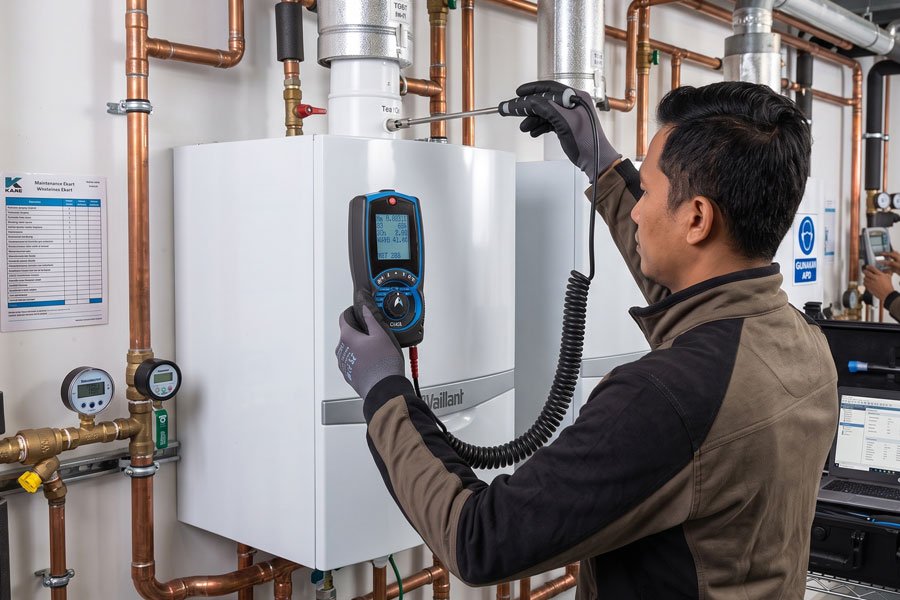
In the modern industrial landscape, where energy efficiency and environmental compliance are paramount, the flue gas analyzer has emerged as an indispensable instrument for combustion management. Whether operating a large-scale power plant, a commercial boiler, or a complex petrochemical refinery, the ability to monitor the chemical composition of exhaust gases is essential for maintaining optimal performance and adhering to stringent emission regulations. By providing real-time data on the combustion process, these devices allow operators to fine-tune fuel-to-air ratios, thereby maximizing thermal efficiency and minimizing the release of harmful pollutants into the atmosphere.
The fundamental principle behind the operation of a flue gas analyzer involves the measurement of various gaseous components within the chimney or stack of a combustion system. During the combustion of fossil fuels, hydrocarbons react with oxygen to produce heat, carbon dioxide (CO2), and water vapor (H2O). However, in real-world applications, combustion is rarely perfect. Incomplete combustion leads to the formation of carbon monoxide (CO) and unburned hydrocarbons, while excess air can lead to the formation of nitrogen oxides (NOx) and sulfur oxides (SOx). The flue gas analyzer acts as the “eyes” of the combustion system, utilizing electrochemical sensors, infrared (NDIR) sensors, or paramagnetic sensors to quantify these gases.
The Science of Combustion Efficiency
To understand why a flue gas analyzer is critical, one must first understand the relationship between excess air and thermal efficiency. The efficiency of a boiler is defined by the ratio of heat absorbed by the working fluid to the total energy input of the fuel. When too little air is provided, the fuel does not burn completely, resulting in significant energy loss and the production of toxic CO. Conversely, when too much air is provided, the excess nitrogen and oxygen absorb heat that would otherwise be transferred to the boiler water, carrying that energy out through the stack.
By using a flue gas analyzer to monitor O2 and CO levels, operators can identify the “sweet spot” of combustion, where the excess air is minimized without triggering incomplete combustion.
Key Components and Measurement Technologies
Modern flue gas analyzers are sophisticated diagnostic tools. The most common sensor technology is the electrochemical cell, which is highly effective for measuring O2, CO, NO, and SO2. These sensors work through a chemical reaction that generates a small electrical current proportional to the concentration of the target gas. For CO2 measurement, Non-Dispersive Infrared (NDIR) technology is preferred, as it measures the absorption of infrared light at specific wavelengths characteristic of the molecule.
In addition to gas concentration, these devices typically measure stack temperature and draft pressure. The integration of these variables allows the analyzer to perform complex calculations, such as the determination of the “excess air percentage” and the “combustion efficiency” based on standard thermodynamic tables. This data is often logged and exported for regulatory reporting, ensuring that facilities remain in compliance with local environmental standards, such as those set by the Ministry of Environment and Forestry in Indonesia.
Strategic Benefits for Industrial Operations
The implementation of a high-quality flue gas analyzer provides several strategic advantages for industrial facilities:
- Fuel Cost Reduction: Even a 1% improvement in combustion efficiency can lead to substantial annual savings in fuel costs for large industrial boilers.
- Extended Equipment Life: By monitoring for corrosive gases like SO2 and ensuring proper combustion temperatures, operators can prevent acid dew point corrosion, which significantly degrades stack and boiler materials over time.
- Regulatory Compliance: With global trends moving toward stricter carbon and emission taxes, having accurate, verifiable data on stack emissions is a prerequisite for legal operation.
- Safety: Continuous monitoring of CO levels serves as a primary safety mechanism, preventing the accumulation of explosive or toxic gas concentrations within the facility.
Selecting the Right Equipment
When selecting a flue gas analyzer for your specific application, it is important to consider the durability of the sensors, the ease of calibration, and the connectivity options for data management systems. For harsh industrial environments, robust, portable, or fixed-mount units with heated sampling lines are recommended to prevent condensation from affecting the accuracy of the readings. At unitek.co.id, we provide specialized solutions designed to withstand the rigors of industrial use while delivering the precision required for modern energy management.
In conclusion, the flue gas analyzer is more than just a monitoring tool; it is a strategic asset for any organization committed to sustainability and operational excellence. By transforming raw combustion data into actionable insights, these devices empower engineers to reduce their environmental footprint while simultaneously improving the bottom line. As industrial processes become increasingly automated, the integration of advanced gas analysis technology will remain a cornerstone of efficient, safe, and compliant energy production.
 English
  Indonesian