
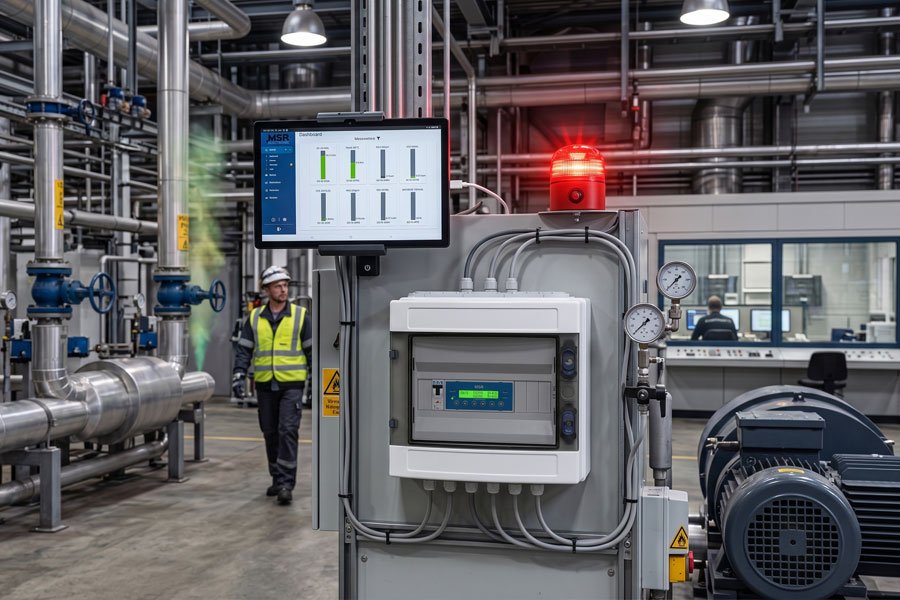
Gas leak detection is a critical safety protocol across both industrial sectors and residential environments. The unintended release of gases—whether highly flammable hydrocarbons like methane and propane, or toxic compounds like carbon monoxide and hydrogen sulfide—poses severe risks of fire, catastrophic explosions, asphyxiation, and environmental degradation. To mitigate these hazards, modern engineering relies on highly sophisticated gas leak detector systems. These systems utilize diverse physical and chemical principles to identify, quantify, and locate escaping gases before they reach dangerous concentrations.
In industrial facilities such as oil refineries, chemical manufacturing plants, and power generation stations, gas leak detection is integrated into comprehensive Leak Detection and Repair (LDAR) programs. This article explores the fundamental scientific principles, historical evolution, and modern technological classifications of gas leak detectors, providing a comprehensive guide to selecting and implementing these vital safety systems.
The Physics and Chemistry of Gas Detection
To understand how a gas leak detector operates, one must examine the underlying physical and chemical interactions between the target gas and the sensing element. Modern detectors are generally classified into four primary technological categories: electrochemical, semiconductor, infrared (optical), and ultrasonic.
- Electrochemical Sensors
Electrochemical sensors operate by reacting with the target gas and producing an electrical signal proportional to the gas concentration. The sensor typically consists of a working electrode (sensing electrode), a counter electrode, and a reference electrode, all immersed in an electrolyte solution.
When a toxic gas such as carbon monoxide (CO) or hydrogen sulfide (H2S) diffuses into the sensor, it undergoes a chemical oxidation or reduction reaction at the working electrode.
This current is directly proportional to the partial pressure and concentration of the gas, allowing for highly precise quantitative measurements.
- Semiconductor (Metal Oxide) Sensors
Metal oxide semiconductor (MOS) sensors utilize a heated ceramic bead coated with a metal oxide film, typically tin dioxide (SnO2). In clean air, oxygen molecules adsorb onto the heated semiconductor surface, trapping free electrons from the conduction band of the metal oxide and creating a high-resistance depletion layer.
When a combustible gas (such as methane, CH4) interacts with the sensor, it reacts with the adsorbed oxygen ions, releasing the trapped electrons back into the conduction band. This reaction significantly reduces the electrical resistance of the sensor.
- Infrared (IR) and Optical Detectors
Infrared gas detectors operate on the physical principle of optical absorption. Every gas molecule possesses unique vibrational and rotational energy states. When exposed to infrared radiation, a molecule will absorb light at specific wavelengths that match its natural resonant frequencies.
By measuring the attenuation of infrared light at a specific target wavelength relative to a reference wavelength, an infrared gas leak detector can identify and quantify specific gases without making physical contact with them. This makes IR detectors highly durable and immune to chemical poisoning.
- Ultrasonic (Acoustic) Detectors
Unlike chemical and optical sensors that measure gas concentration, ultrasonic detectors identify the physical sound of a leak. When a pressurized gas escapes through an orifice into a lower-pressure environment, the turbulent flow generates acoustic energy. A significant portion of this acoustic energy is produced in the ultrasonic frequency spectrum, typically between 24kHz and 100kHz, which is completely inaudible to the human ear.
Ultrasonic sensors utilize piezoelectric transducers to detect these high-frequency sound waves. Because they respond to the sound of the leak rather than the gas itself, they are unaffected by wind, thermal dilution, or gas dispersion, making them exceptionally reliable for outdoor, high-pressure industrial pipelines.
Industrial vs. Domestic Applications
Gas leak detection strategies differ significantly depending on the environment in which they are deployed.
Industrial Gas Detection
Industrial facilities deal with high volumes of volatile, toxic, and high-pressure substances. In these environments, gas leak detection is categorized into three priority levels to optimize emergency response:
- Level 1 (High Priority): Large, uncontrolled releases of toxic or flammable gases that pose an immediate threat to life and property. These require automated system shutdowns and immediate evacuation.
- Level 2 (Medium Priority): Smaller, controlled leaks that do not pose an immediate threat but require prompt, scheduled maintenance to prevent escalation.
- Level 3 (Low Priority): Minor fugitive emissions, often detected during routine LDAR inspections, addressed during standard maintenance cycles.
Industries such as oil and gas extraction, chemical manufacturing, and power utilities rely on a combination of fixed point-detectors, open-path infrared barriers, and portable handheld sniffers to maintain a multi-layered safety net.
Domestic Gas Detection
In residential settings, gas leaks typically involve natural gas (methane), liquefied petroleum gas (LPG – propane/butane), or carbon monoxide (CO) from faulty combustion appliances.
- Appliance and Fitting Leaks: Aging stoves, water heaters, and loose pipe fittings are common domestic leak sources.
- Odorization: Because natural gas and LPG are naturally odorless, utilities add a chemical odorant called t-butyl mercaptan (which smells like rotten eggs) to ensure that human senses can detect even minor leaks.
- Residential Detectors: Home safety relies on simple, cost-effective electronic detectors plugged into walls near fuel-burning appliances to provide loud audible alarms when gas concentrations reach a fraction of the Lower Explosive Limit (LEL).
Conclusion
Implementing a robust gas leak detector system is an indispensable aspect of modern safety engineering. Whether utilizing the chemical sensitivity of electrochemical cells, the optical precision of infrared absorption, or the acoustic detection of ultrasonic sensors, understanding the physical principles of these devices allows operators to select the optimal technology for their specific environment. As industries move toward automated, AI-driven monitoring, the speed and accuracy of gas leak detection will continue to advance, safeguarding human lives, protecting valuable industrial assets, and reducing environmental emissions




 Indonesian
  English